Feb 14, 2026
Solovair's Anti- Marketing
Solovair built the original Dr. Martens. Then they watched their old partner chase every trend, move every job overseas, and lose the only thing that mattered. A story about what happens when a brand refuses to blink.
Brand
Clothing
Heritage
Legacy
As the heritage economy shifts toward accountability, Solovair stands as proof that the quietest brands in the room are often the most powerful ones.
In a red-brick Victorian factory on a quiet street in Wollaston, Northamptonshire, five shoemakers formed a co-operative in 1881. They called it the Northamptonshire Productive Society (NPS) and they built boots for people who needed them to last. The county had been the cradle of British shoemaking for centuries, and NPS was its quiet backbone. When R. Griggs & Co. licensed a German doctor's air-cushioned sole design in 1960 and needed someone who could build a boot worthy of it, they turned to NPS. The result was the first ever Dr. Martens 1460; every stitch, every welt, every pair of them, made in Wollaston. NPS made every single Dr. Martens sold in the world for the next 35 years.
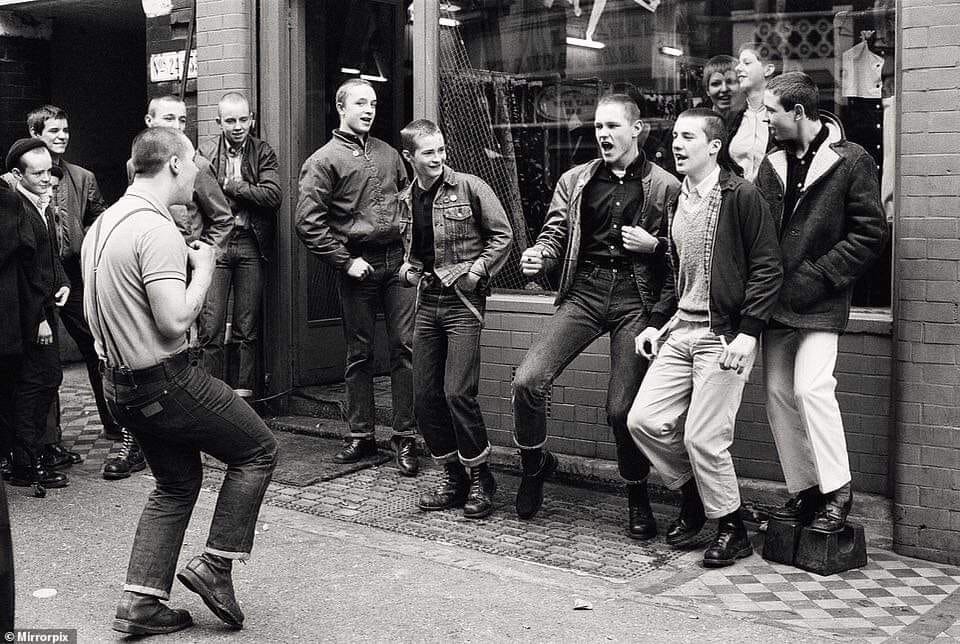
Those were the boots the punks wore. The goths, the mods, the factory workers and the postmen. The cultural weight carried by the Dr. Martens name in the 1970s and 80s was built entirely on a boot made by NPS, a factory that received none of the credit and asked for none of it.
Revolution
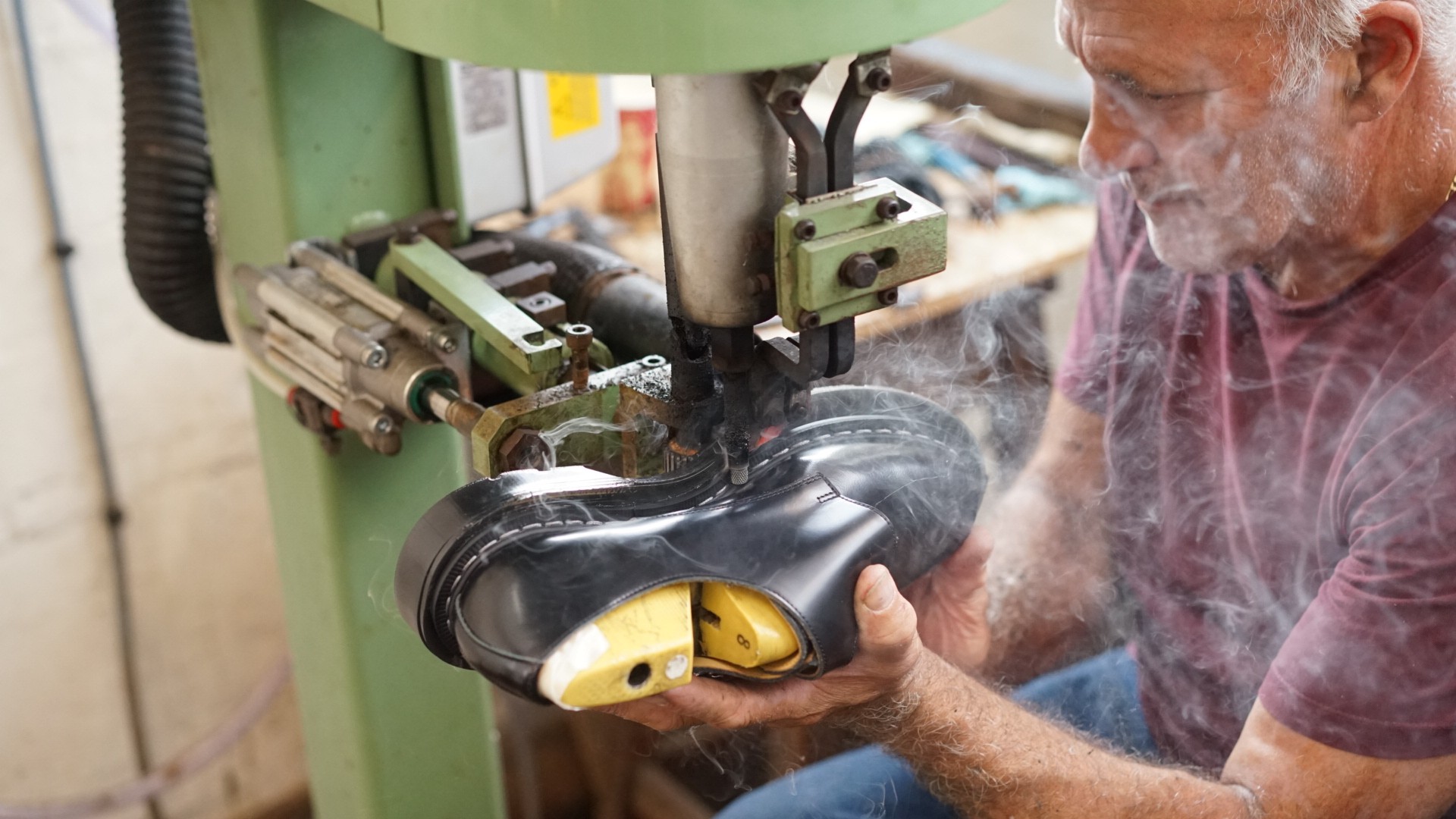
Solovair isn't just making the original boot - it is the original boot. The factory never changed. The brand is simply the building finally introducing itself.
In the mid-1990s Dr. Martens made the decision that defined, and nearly destroyed it: move production overseas, cut costs, chase scale. The partnership with NPS ended. By the early 2000s the iconic 1460 was being made in Asia. NPS looked around the Wollaston factory and made a different decision. They kept going. They trademarked the Solovair name in 1995, kept the same lasts, the same leather cutters, the same century-old stitching machines, the same 140-step hand construction process and began selling their own boot. Grey welt stitching instead of yellow. A pull loop reading Made in England since 1881. No billboard. No celebrity. No campaign.
Dr. Martens, meanwhile, floated on the London Stock Exchange in January 2021 at a valuation of £3.7 billion. By early 2024 the share price had fallen more than 85% from that peak. US wholesale revenues dropped 46% in a single quarter. The company that had sold over 14 million pairs in a year was struggling to convert cultural visibility into sustainable demand. The diagnosis was simple and brutal: they had sold the one thing you can't buy back. When a brand built entirely on working-class authenticity starts being made in a Vietnamese factory and marketed through celebrity endorsements, the audience that loved it, the one that was allergic to exactly that kind of performance, walks away. And they don't come back.
Endurance
Strong brand is not what you say about yourself. It's what happens when you leave the room. Solovair left the room in 1995 and the conversation about them has only grown.
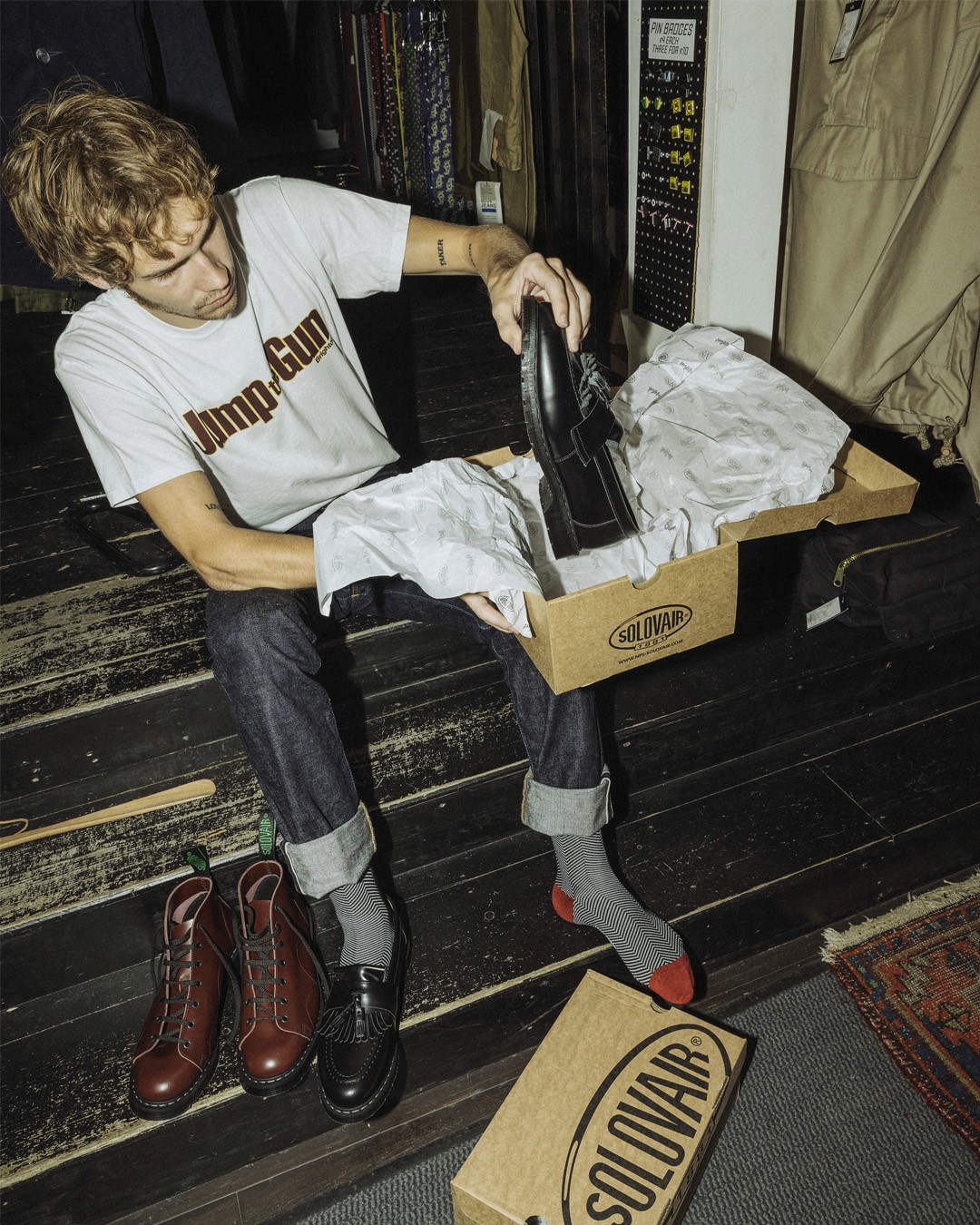
Solovair makes around 100,000 pairs per year. Dr. Martens makes 14 million. By every conventional metric Solovair barely registers, monthly search volume sitting around 25,000 compared to over 450,000 for its former partner. And yet within the communities that drive real cultural influence, heritage menswear, slow fashion, ethical consumption. Solovair's reputation has been building for three decades without a single paid placement. An Instagram account with 122,000 followers built through one hashtag, #showusyoursolovair, and years of customers photographing their boots ageing in real time.
No lookbooks. No influencers. Just the product, developing a patina that a mass-produced boot is physically incapable of replicating.
Stockists like New York's Noah and London's YMC didn't carry Solovair because of a sales pitch. They carried it because the product earned it. Each stocking decision acted as an editorial endorsement to exactly the audience most immune to traditional advertising. The brand has never needed to say it's the real thing. The people who find it say it for them loudly, repeatedly, and for free.
The Solovair story is not a lesson about staying small. It is a lesson about knowing what you are. In a decade where Dr. Martens chased collaborations, lifestyle expansions, and US market share (and lost 85% of its public value in the process) Solovair did none of those things and emerged with a brand more trusted, among the audiences most brands desperately want to reach, than the company it once made boots for.
The shift happening in consumer culture right now is a shift toward accountability. Slow fashion, ethical sourcing, resoleability, country of origin; these are the values of the most influential buyers in the market: educated, digitally fluent, deeply hostile to the idea that a brand can sell authenticity it doesn't actually possess. Solovair doesn't need to market its values. Its values are the product. The boot is resoleable. The leather is European-tanned. The factory is in Northamptonshire. The machines are 120 years old. Every single claim is verifiable by anyone who visits, and the factory welcomes visitors.
There is a word for a brand that earns devotion without chasing it, that grows without advertising, that survives every trend cycle because it was never a trend: enduring.
Latest Updates
(ONA — 02)
2026

FAQ
01
What does a project look like?
02
Are all projects fixed scope?
03
What is the ROI?
04
How do we measure success?
05
What do I need to get started?
Feb 14, 2026
Solovair's Anti- Marketing
Solovair built the original Dr. Martens. Then they watched their old partner chase every trend, move every job overseas, and lose the only thing that mattered. A story about what happens when a brand refuses to blink.
Brand
Clothing
Heritage
Legacy
As the heritage economy shifts toward accountability, Solovair stands as proof that the quietest brands in the room are often the most powerful ones.
In a red-brick Victorian factory on a quiet street in Wollaston, Northamptonshire, five shoemakers formed a co-operative in 1881. They called it the Northamptonshire Productive Society (NPS) and they built boots for people who needed them to last. The county had been the cradle of British shoemaking for centuries, and NPS was its quiet backbone. When R. Griggs & Co. licensed a German doctor's air-cushioned sole design in 1960 and needed someone who could build a boot worthy of it, they turned to NPS. The result was the first ever Dr. Martens 1460; every stitch, every welt, every pair of them, made in Wollaston. NPS made every single Dr. Martens sold in the world for the next 35 years.
Those were the boots the punks wore. The goths, the mods, the factory workers and the postmen. The cultural weight carried by the Dr. Martens name in the 1970s and 80s was built entirely on a boot made by NPS, a factory that received none of the credit and asked for none of it.
Revolution
Solovair isn't just making the original boot - it is the original boot. The factory never changed. The brand is simply the building finally introducing itself.
In the mid-1990s Dr. Martens made the decision that defined, and nearly destroyed it: move production overseas, cut costs, chase scale. The partnership with NPS ended. By the early 2000s the iconic 1460 was being made in Asia. NPS looked around the Wollaston factory and made a different decision. They kept going. They trademarked the Solovair name in 1995, kept the same lasts, the same leather cutters, the same century-old stitching machines, the same 140-step hand construction process and began selling their own boot. Grey welt stitching instead of yellow. A pull loop reading Made in England since 1881. No billboard. No celebrity. No campaign.
Dr. Martens, meanwhile, floated on the London Stock Exchange in January 2021 at a valuation of £3.7 billion. By early 2024 the share price had fallen more than 85% from that peak. US wholesale revenues dropped 46% in a single quarter. The company that had sold over 14 million pairs in a year was struggling to convert cultural visibility into sustainable demand. The diagnosis was simple and brutal: they had sold the one thing you can't buy back. When a brand built entirely on working-class authenticity starts being made in a Vietnamese factory and marketed through celebrity endorsements, the audience that loved it, the one that was allergic to exactly that kind of performance, walks away. And they don't come back.
Endurance
Strong brand is not what you say about yourself. It's what happens when you leave the room. Solovair left the room in 1995 and the conversation about them has only grown.
Solovair makes around 100,000 pairs per year. Dr. Martens makes 14 million. By every conventional metric Solovair barely registers, monthly search volume sitting around 25,000 compared to over 450,000 for its former partner. And yet within the communities that drive real cultural influence, heritage menswear, slow fashion, ethical consumption. Solovair's reputation has been building for three decades without a single paid placement. An Instagram account with 122,000 followers built through one hashtag, #showusyoursolovair, and years of customers photographing their boots ageing in real time.
No lookbooks. No influencers. Just the product, developing a patina that a mass-produced boot is physically incapable of replicating.
Stockists like New York's Noah and London's YMC didn't carry Solovair because of a sales pitch. They carried it because the product earned it. Each stocking decision acted as an editorial endorsement to exactly the audience most immune to traditional advertising. The brand has never needed to say it's the real thing. The people who find it say it for them loudly, repeatedly, and for free.
The Solovair story is not a lesson about staying small. It is a lesson about knowing what you are. In a decade where Dr. Martens chased collaborations, lifestyle expansions, and US market share (and lost 85% of its public value in the process) Solovair did none of those things and emerged with a brand more trusted, among the audiences most brands desperately want to reach, than the company it once made boots for.
The shift happening in consumer culture right now is a shift toward accountability. Slow fashion, ethical sourcing, resoleability, country of origin; these are the values of the most influential buyers in the market: educated, digitally fluent, deeply hostile to the idea that a brand can sell authenticity it doesn't actually possess. Solovair doesn't need to market its values. Its values are the product. The boot is resoleable. The leather is European-tanned. The factory is in Northamptonshire. The machines are 120 years old. Every single claim is verifiable by anyone who visits, and the factory welcomes visitors.
There is a word for a brand that earns devotion without chasing it, that grows without advertising, that survives every trend cycle because it was never a trend: enduring.
Latest Updates
(ONA — 02)
2026
FAQ
01
What does a project look like?
02
Are all projects fixed scope?
03
What is the ROI?
04
How do we measure success?
05
What do I need to get started?
Feb 14, 2026
Solovair's Anti- Marketing
Solovair built the original Dr. Martens. Then they watched their old partner chase every trend, move every job overseas, and lose the only thing that mattered. A story about what happens when a brand refuses to blink.
Brand
Clothing
Heritage
Legacy
As the heritage economy shifts toward accountability, Solovair stands as proof that the quietest brands in the room are often the most powerful ones.
In a red-brick Victorian factory on a quiet street in Wollaston, Northamptonshire, five shoemakers formed a co-operative in 1881. They called it the Northamptonshire Productive Society (NPS) and they built boots for people who needed them to last. The county had been the cradle of British shoemaking for centuries, and NPS was its quiet backbone. When R. Griggs & Co. licensed a German doctor's air-cushioned sole design in 1960 and needed someone who could build a boot worthy of it, they turned to NPS. The result was the first ever Dr. Martens 1460; every stitch, every welt, every pair of them, made in Wollaston. NPS made every single Dr. Martens sold in the world for the next 35 years.
Those were the boots the punks wore. The goths, the mods, the factory workers and the postmen. The cultural weight carried by the Dr. Martens name in the 1970s and 80s was built entirely on a boot made by NPS, a factory that received none of the credit and asked for none of it.
Revolution
Solovair isn't just making the original boot - it is the original boot. The factory never changed. The brand is simply the building finally introducing itself.
In the mid-1990s Dr. Martens made the decision that defined, and nearly destroyed it: move production overseas, cut costs, chase scale. The partnership with NPS ended. By the early 2000s the iconic 1460 was being made in Asia. NPS looked around the Wollaston factory and made a different decision. They kept going. They trademarked the Solovair name in 1995, kept the same lasts, the same leather cutters, the same century-old stitching machines, the same 140-step hand construction process and began selling their own boot. Grey welt stitching instead of yellow. A pull loop reading Made in England since 1881. No billboard. No celebrity. No campaign.
Dr. Martens, meanwhile, floated on the London Stock Exchange in January 2021 at a valuation of £3.7 billion. By early 2024 the share price had fallen more than 85% from that peak. US wholesale revenues dropped 46% in a single quarter. The company that had sold over 14 million pairs in a year was struggling to convert cultural visibility into sustainable demand. The diagnosis was simple and brutal: they had sold the one thing you can't buy back. When a brand built entirely on working-class authenticity starts being made in a Vietnamese factory and marketed through celebrity endorsements, the audience that loved it, the one that was allergic to exactly that kind of performance, walks away. And they don't come back.
Endurance
Strong brand is not what you say about yourself. It's what happens when you leave the room. Solovair left the room in 1995 and the conversation about them has only grown.
Solovair makes around 100,000 pairs per year. Dr. Martens makes 14 million. By every conventional metric Solovair barely registers, monthly search volume sitting around 25,000 compared to over 450,000 for its former partner. And yet within the communities that drive real cultural influence, heritage menswear, slow fashion, ethical consumption. Solovair's reputation has been building for three decades without a single paid placement. An Instagram account with 122,000 followers built through one hashtag, #showusyoursolovair, and years of customers photographing their boots ageing in real time.
No lookbooks. No influencers. Just the product, developing a patina that a mass-produced boot is physically incapable of replicating.
Stockists like New York's Noah and London's YMC didn't carry Solovair because of a sales pitch. They carried it because the product earned it. Each stocking decision acted as an editorial endorsement to exactly the audience most immune to traditional advertising. The brand has never needed to say it's the real thing. The people who find it say it for them loudly, repeatedly, and for free.
The Solovair story is not a lesson about staying small. It is a lesson about knowing what you are. In a decade where Dr. Martens chased collaborations, lifestyle expansions, and US market share (and lost 85% of its public value in the process) Solovair did none of those things and emerged with a brand more trusted, among the audiences most brands desperately want to reach, than the company it once made boots for.
The shift happening in consumer culture right now is a shift toward accountability. Slow fashion, ethical sourcing, resoleability, country of origin; these are the values of the most influential buyers in the market: educated, digitally fluent, deeply hostile to the idea that a brand can sell authenticity it doesn't actually possess. Solovair doesn't need to market its values. Its values are the product. The boot is resoleable. The leather is European-tanned. The factory is in Northamptonshire. The machines are 120 years old. Every single claim is verifiable by anyone who visits, and the factory welcomes visitors.
There is a word for a brand that earns devotion without chasing it, that grows without advertising, that survives every trend cycle because it was never a trend: enduring.
FAQ
What does a project look like?
Are all projects fixed scope?
What is the ROI?
How do we measure success?
What do I need to get started?