Jan 20, 2026
Simplicity Perfected
The pencil that sold for $60 a piece on eBay (while discontinued) without a single ad, a single campaign, or a single person at the company asking anyone to care. A story about scarcity, creative legacy, and what happens when a product becomes a cultural object.
Product
Branding
Audience
Community
Blackwing turned discontinuation into the most powerful marketing move in stationery history, entirely by accident. What they built from that moment is anything but accidental.
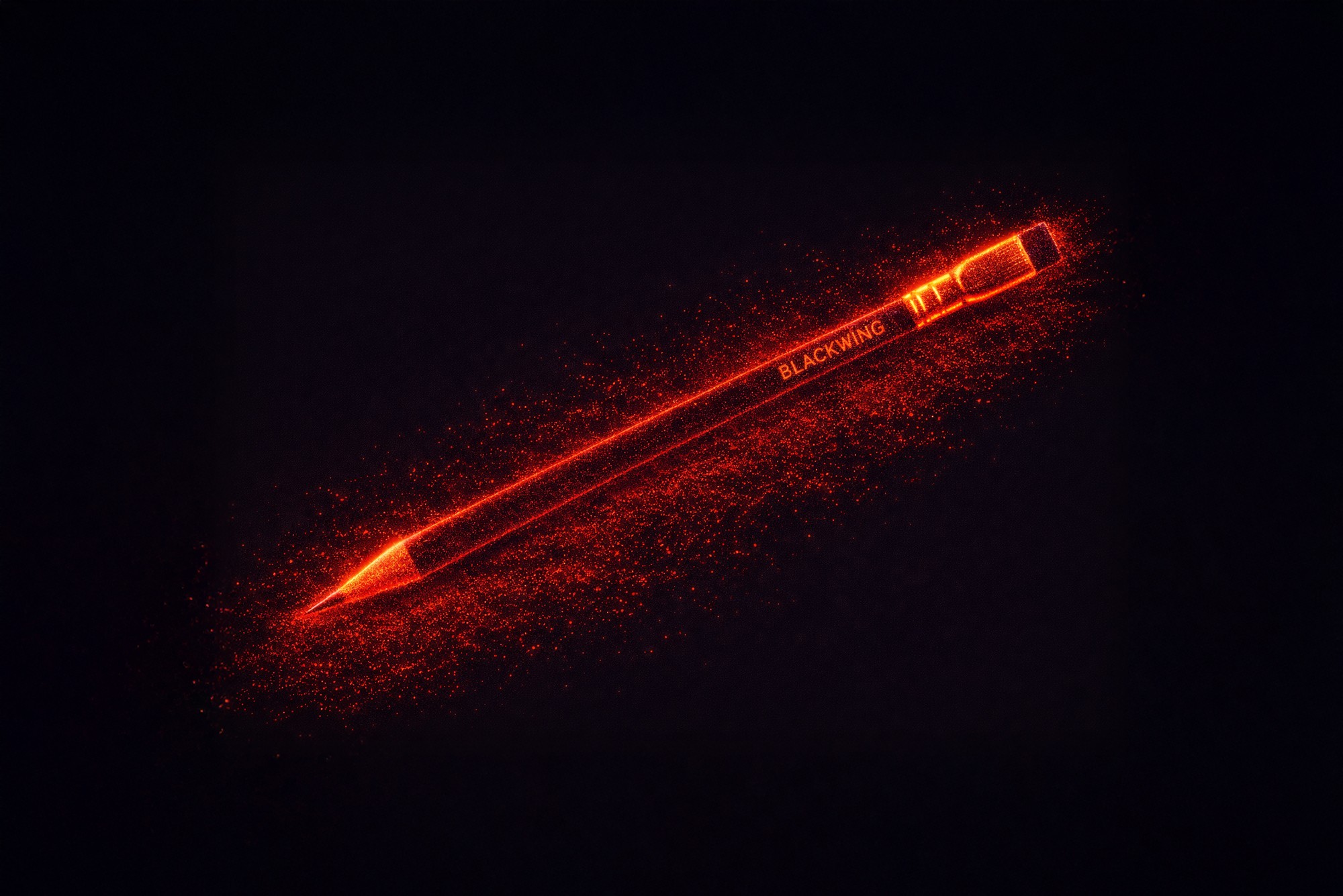
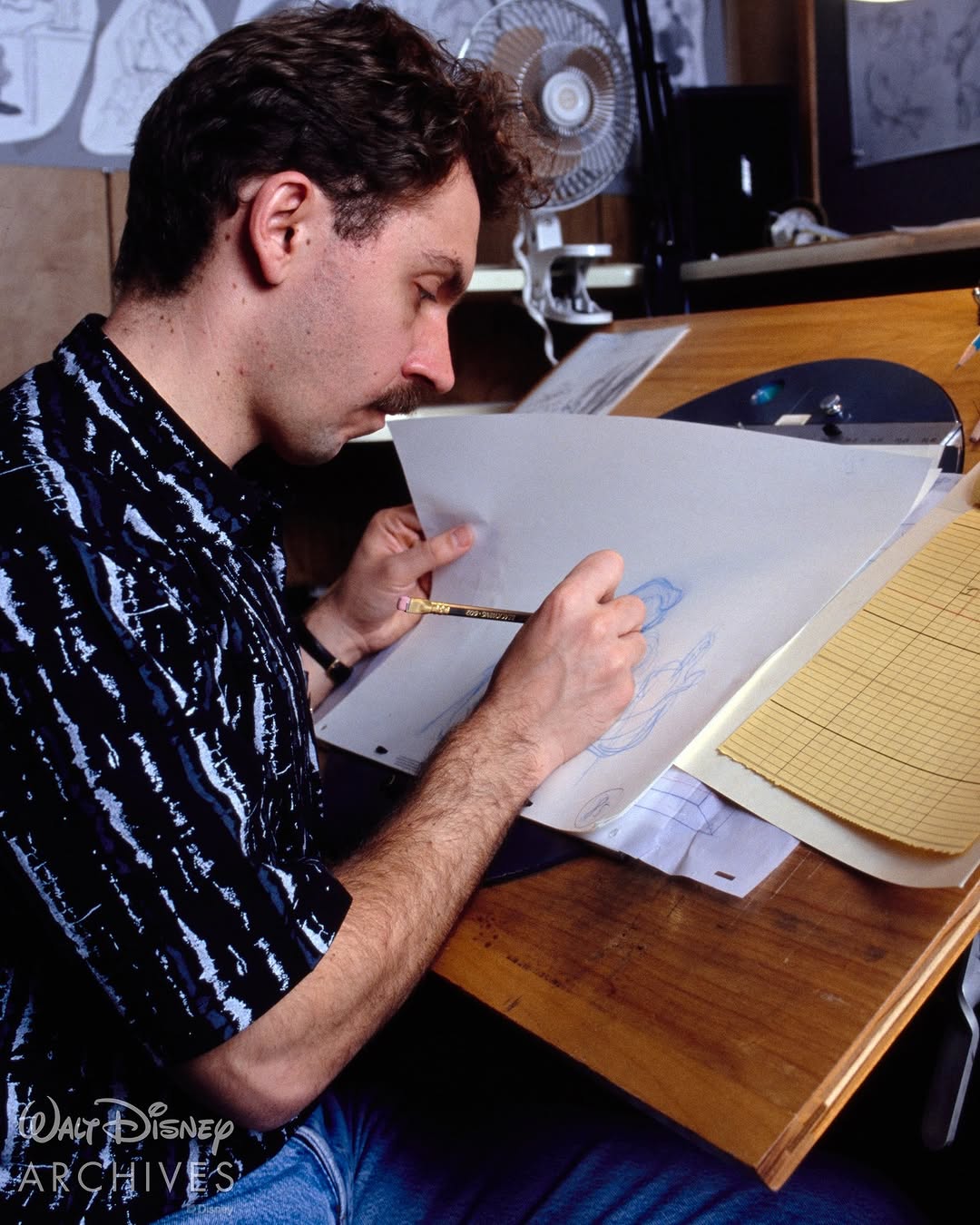
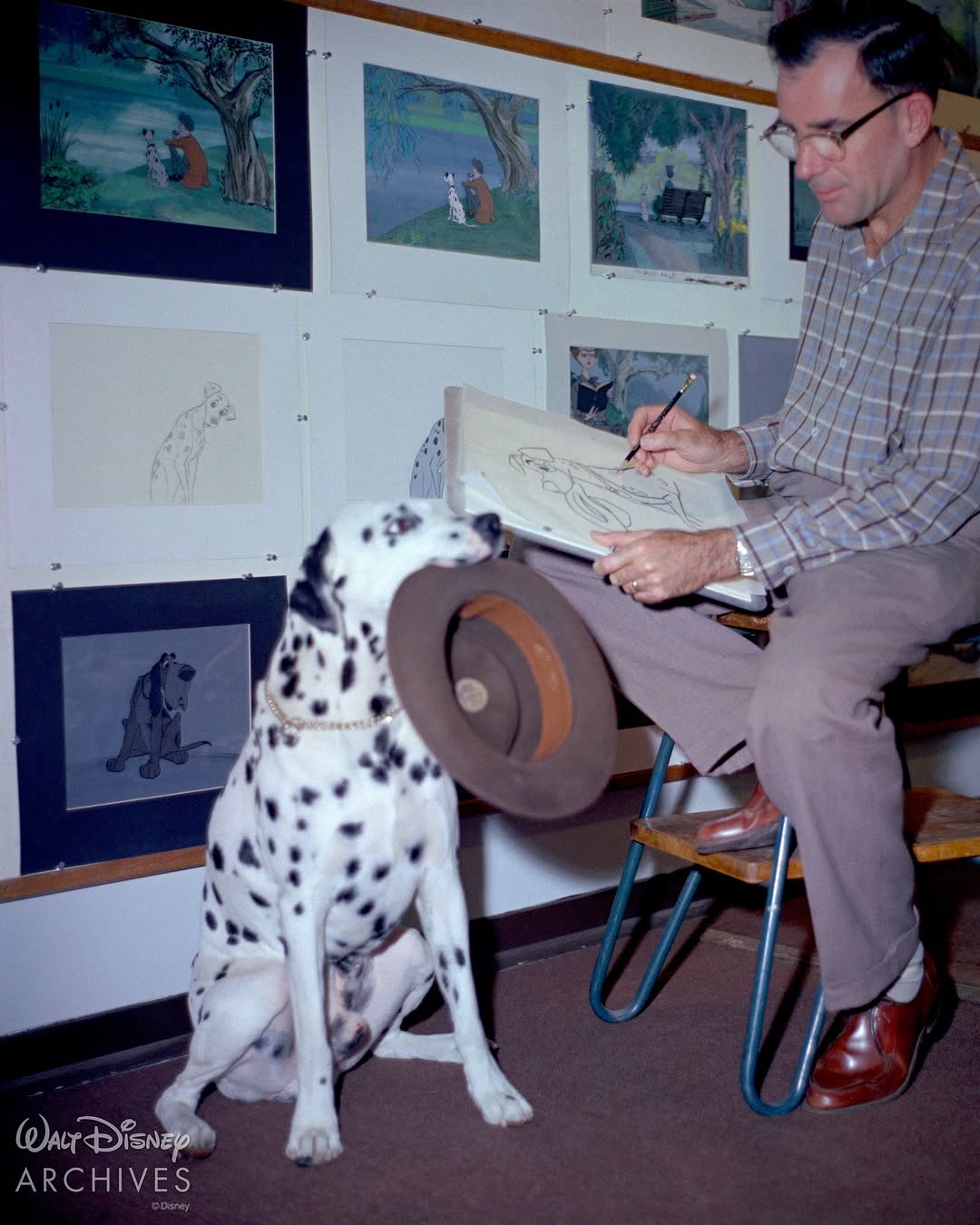
The Blackwing 602 was first introduced by the Eberhard Faber Pencil Company in the 1930s, stamped with a single line of copy on its side: Half the Pressure, Twice the Speed. Sportcal It was pitched at stenographers. What it became was something else entirely. Marketed initially as a premium pencil for writers, artists, and musicians, it stood out from competitors through its distinctive ferrule design, smooth graphite core, and replaceable rectangular eraser, acquiring an "if you know, you know" quality among mid-century creatives. Las Vegas Sun Its users included animators Chuck Jones and Don Bluth, authors John Steinbeck, Truman Capote and E.B. White, and composers Leonard Bernstein, Quincy Jones, and Stephen Sondheim.
Sportcal Disney animator Shamus Culhane reportedly asked to be buried with his. These were not endorsements. No one was paid. The pencil simply made its way into the hands of the people doing the most important creative work of the 20th century, and they talked about it the way people talk about tools they genuinely cannot live without.
Then, in 1998, after several corporate acquisitions, it was discontinued. Variety What happened next is the part no marketing textbook has a framework for. With so few remaining in the market, the legend of the brand only grew, achieving a near-cult status among die-hard users. Las Vegas Sun At the peak of the Blackwing craze in the late 1990s and early 2000s, a single pencil was commanding nearly $75 (close to $130 in today's money). Las Vegas Sun The brand had no owner, no website, no social media, no campaign. It had only scarcity, a provenance that kept getting repeated, and an audience that kept growing the more unavailable the product became.
Revival
The revival could have cheapened everything. Instead, it became a second act more interesting than the first, because it listened before it spoke.
In 2007, California Cedar Products introduced their Palomino range of pencils using genuine Incense-cedar and premium graphite. Artists and writers began comparing them to their beloved Blackwing 602s, and people started asking the company to consider reviving the Blackwing brand. Variety That detail matters enormously. The demand came from the community outward, not from a brand deciding it had a story to tell. CalCedar's web-supported marketing proved successful, with sales reaching $150,000 in 2010 Deadline, and the revival launched the same year, touching off immediate controversy among purists who felt the graphite formula wasn't faithful to the original. Rather than dismiss the criticism, the company listened, reformulated, and released the Palomino Blackwing 602, closer to the original pencil, painted in the authentic pearl grey lacquer, with the original slogan restored to the shaft. The purists, for the most part, came around.
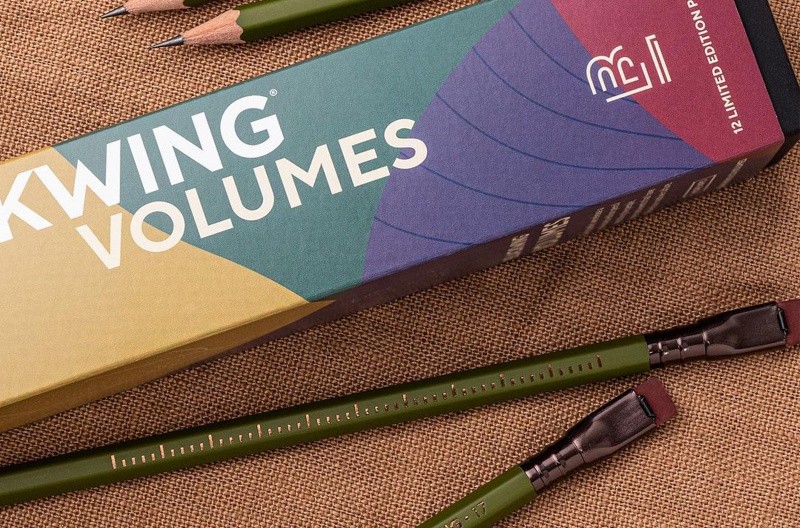
What followed was a masterclass in community-led brand building. Rather than run campaigns, Blackwing launched the Volumes program; four limited edition pencils per year, each one honouring a cultural icon, a creative movement, or a defining moment in the arts. Variety Editions have paid tribute to Jerry Garcia, Lennon and McCartney (honouring the 192 songs they wrote together) and Frank Lloyd Wright. Motorsport Subscribers pay $125 per year and receive each quarterly release before it's available to the public, along with a sealed archive tube for collecting. The Playlist The model borrowed its mechanics from vinyl subscription clubs and Field Notes' limited colours programme, but the editorial ambition behind each edition, the genuine research into the subject, the pencil designed specifically around the person or place being honoured, gave it a cultural weight that most stationery brands can't touch. Volumes sell out. Subscribers collect the archive tubes. People photograph their sets and post them. The brand never asks them to.
Experience
Blackwing proves that the most durable brands are not the loudest ones, they are the ones that earn a place inside the creative process itself, and then never leave it.
The Blackwing Foundation donates a portion of every pencil sale to arts and music education in schools. Each Volumes subscription also directs $5 to the Foundation's efforts to improve child development through music and arts education. This is not cause-marketing in the way most brands use the term; a philanthropic layer applied over a commercial product to soften its edges. It is structurally embedded in the business model. Every transaction contributes. The brand that built its reputation on the creative act is now funding the conditions under which the next generation of creative people will develop. The loop is genuine, and people can feel the difference.
What Blackwing has built is something most brands spend enormous sums trying to manufacture: a community that does not need to be incentivised to participate. The Volumes programme gives collectors a reason to stay subscribed year-round. The series has also functioned as a product laboratory; limited editions have allowed Blackwing to test different graphite grades and finishes that eventually found their way into the permanent lineup. The extra-firm graphite and the Blackwing Natural both started as Volume experiments. In this way the community isn't just an audience, they are effectively an unpaid R&D panel who happen to be deeply invested in the outcome. Meanwhile the core product, the 602 itself, has never needed to justify its price. It carries over 100 years of family-run pencil industry experience, a provenance that stretches from Steinbeck's desk to every working animator's studio to the hands of musicians composing under stage lights who swore the graphite was easier to read. You don't market that. You simply don't get in its way.
Latest Updates
(ONA — 02)
2026
FAQ
01
What does a project look like?
02
Are all projects fixed scope?
03
What is the ROI?
04
How do we measure success?
05
What do I need to get started?
Jan 20, 2026
Simplicity Perfected
The pencil that sold for $60 a piece on eBay (while discontinued) without a single ad, a single campaign, or a single person at the company asking anyone to care. A story about scarcity, creative legacy, and what happens when a product becomes a cultural object.
Product
Branding
Audience
Community
Blackwing turned discontinuation into the most powerful marketing move in stationery history, entirely by accident. What they built from that moment is anything but accidental.
The Blackwing 602 was first introduced by the Eberhard Faber Pencil Company in the 1930s, stamped with a single line of copy on its side: Half the Pressure, Twice the Speed. Sportcal It was pitched at stenographers. What it became was something else entirely. Marketed initially as a premium pencil for writers, artists, and musicians, it stood out from competitors through its distinctive ferrule design, smooth graphite core, and replaceable rectangular eraser, acquiring an "if you know, you know" quality among mid-century creatives. Las Vegas Sun Its users included animators Chuck Jones and Don Bluth, authors John Steinbeck, Truman Capote and E.B. White, and composers Leonard Bernstein, Quincy Jones, and Stephen Sondheim.
Sportcal Disney animator Shamus Culhane reportedly asked to be buried with his. These were not endorsements. No one was paid. The pencil simply made its way into the hands of the people doing the most important creative work of the 20th century, and they talked about it the way people talk about tools they genuinely cannot live without.
Then, in 1998, after several corporate acquisitions, it was discontinued. Variety What happened next is the part no marketing textbook has a framework for. With so few remaining in the market, the legend of the brand only grew, achieving a near-cult status among die-hard users. Las Vegas Sun At the peak of the Blackwing craze in the late 1990s and early 2000s, a single pencil was commanding nearly $75 (close to $130 in today's money). Las Vegas Sun The brand had no owner, no website, no social media, no campaign. It had only scarcity, a provenance that kept getting repeated, and an audience that kept growing the more unavailable the product became.
Revival
The revival could have cheapened everything. Instead, it became a second act more interesting than the first, because it listened before it spoke.
In 2007, California Cedar Products introduced their Palomino range of pencils using genuine Incense-cedar and premium graphite. Artists and writers began comparing them to their beloved Blackwing 602s, and people started asking the company to consider reviving the Blackwing brand. Variety That detail matters enormously. The demand came from the community outward, not from a brand deciding it had a story to tell. CalCedar's web-supported marketing proved successful, with sales reaching $150,000 in 2010 Deadline, and the revival launched the same year, touching off immediate controversy among purists who felt the graphite formula wasn't faithful to the original. Rather than dismiss the criticism, the company listened, reformulated, and released the Palomino Blackwing 602, closer to the original pencil, painted in the authentic pearl grey lacquer, with the original slogan restored to the shaft. The purists, for the most part, came around.
What followed was a masterclass in community-led brand building. Rather than run campaigns, Blackwing launched the Volumes program; four limited edition pencils per year, each one honouring a cultural icon, a creative movement, or a defining moment in the arts. Variety Editions have paid tribute to Jerry Garcia, Lennon and McCartney (honouring the 192 songs they wrote together) and Frank Lloyd Wright. Motorsport Subscribers pay $125 per year and receive each quarterly release before it's available to the public, along with a sealed archive tube for collecting. The Playlist The model borrowed its mechanics from vinyl subscription clubs and Field Notes' limited colours programme, but the editorial ambition behind each edition, the genuine research into the subject, the pencil designed specifically around the person or place being honoured, gave it a cultural weight that most stationery brands can't touch. Volumes sell out. Subscribers collect the archive tubes. People photograph their sets and post them. The brand never asks them to.
Experience
Blackwing proves that the most durable brands are not the loudest ones, they are the ones that earn a place inside the creative process itself, and then never leave it.
The Blackwing Foundation donates a portion of every pencil sale to arts and music education in schools. Each Volumes subscription also directs $5 to the Foundation's efforts to improve child development through music and arts education. This is not cause-marketing in the way most brands use the term; a philanthropic layer applied over a commercial product to soften its edges. It is structurally embedded in the business model. Every transaction contributes. The brand that built its reputation on the creative act is now funding the conditions under which the next generation of creative people will develop. The loop is genuine, and people can feel the difference.
What Blackwing has built is something most brands spend enormous sums trying to manufacture: a community that does not need to be incentivised to participate. The Volumes programme gives collectors a reason to stay subscribed year-round. The series has also functioned as a product laboratory; limited editions have allowed Blackwing to test different graphite grades and finishes that eventually found their way into the permanent lineup. The extra-firm graphite and the Blackwing Natural both started as Volume experiments. In this way the community isn't just an audience, they are effectively an unpaid R&D panel who happen to be deeply invested in the outcome. Meanwhile the core product, the 602 itself, has never needed to justify its price. It carries over 100 years of family-run pencil industry experience, a provenance that stretches from Steinbeck's desk to every working animator's studio to the hands of musicians composing under stage lights who swore the graphite was easier to read. You don't market that. You simply don't get in its way.
Latest Updates
(ONA — 02)
2026
FAQ
01
What does a project look like?
02
Are all projects fixed scope?
03
What is the ROI?
04
How do we measure success?
05
What do I need to get started?
Jan 20, 2026
Simplicity Perfected
The pencil that sold for $60 a piece on eBay (while discontinued) without a single ad, a single campaign, or a single person at the company asking anyone to care. A story about scarcity, creative legacy, and what happens when a product becomes a cultural object.
Product
Branding
Audience
Community
Blackwing turned discontinuation into the most powerful marketing move in stationery history, entirely by accident. What they built from that moment is anything but accidental.
The Blackwing 602 was first introduced by the Eberhard Faber Pencil Company in the 1930s, stamped with a single line of copy on its side: Half the Pressure, Twice the Speed. Sportcal It was pitched at stenographers. What it became was something else entirely. Marketed initially as a premium pencil for writers, artists, and musicians, it stood out from competitors through its distinctive ferrule design, smooth graphite core, and replaceable rectangular eraser, acquiring an "if you know, you know" quality among mid-century creatives. Las Vegas Sun Its users included animators Chuck Jones and Don Bluth, authors John Steinbeck, Truman Capote and E.B. White, and composers Leonard Bernstein, Quincy Jones, and Stephen Sondheim.
Sportcal Disney animator Shamus Culhane reportedly asked to be buried with his. These were not endorsements. No one was paid. The pencil simply made its way into the hands of the people doing the most important creative work of the 20th century, and they talked about it the way people talk about tools they genuinely cannot live without.
Then, in 1998, after several corporate acquisitions, it was discontinued. Variety What happened next is the part no marketing textbook has a framework for. With so few remaining in the market, the legend of the brand only grew, achieving a near-cult status among die-hard users. Las Vegas Sun At the peak of the Blackwing craze in the late 1990s and early 2000s, a single pencil was commanding nearly $75 (close to $130 in today's money). Las Vegas Sun The brand had no owner, no website, no social media, no campaign. It had only scarcity, a provenance that kept getting repeated, and an audience that kept growing the more unavailable the product became.
Revival
The revival could have cheapened everything. Instead, it became a second act more interesting than the first, because it listened before it spoke.
In 2007, California Cedar Products introduced their Palomino range of pencils using genuine Incense-cedar and premium graphite. Artists and writers began comparing them to their beloved Blackwing 602s, and people started asking the company to consider reviving the Blackwing brand. Variety That detail matters enormously. The demand came from the community outward, not from a brand deciding it had a story to tell. CalCedar's web-supported marketing proved successful, with sales reaching $150,000 in 2010 Deadline, and the revival launched the same year, touching off immediate controversy among purists who felt the graphite formula wasn't faithful to the original. Rather than dismiss the criticism, the company listened, reformulated, and released the Palomino Blackwing 602, closer to the original pencil, painted in the authentic pearl grey lacquer, with the original slogan restored to the shaft. The purists, for the most part, came around.
What followed was a masterclass in community-led brand building. Rather than run campaigns, Blackwing launched the Volumes program; four limited edition pencils per year, each one honouring a cultural icon, a creative movement, or a defining moment in the arts. Variety Editions have paid tribute to Jerry Garcia, Lennon and McCartney (honouring the 192 songs they wrote together) and Frank Lloyd Wright. Motorsport Subscribers pay $125 per year and receive each quarterly release before it's available to the public, along with a sealed archive tube for collecting. The Playlist The model borrowed its mechanics from vinyl subscription clubs and Field Notes' limited colours programme, but the editorial ambition behind each edition, the genuine research into the subject, the pencil designed specifically around the person or place being honoured, gave it a cultural weight that most stationery brands can't touch. Volumes sell out. Subscribers collect the archive tubes. People photograph their sets and post them. The brand never asks them to.
Experience
Blackwing proves that the most durable brands are not the loudest ones, they are the ones that earn a place inside the creative process itself, and then never leave it.
The Blackwing Foundation donates a portion of every pencil sale to arts and music education in schools. Each Volumes subscription also directs $5 to the Foundation's efforts to improve child development through music and arts education. This is not cause-marketing in the way most brands use the term; a philanthropic layer applied over a commercial product to soften its edges. It is structurally embedded in the business model. Every transaction contributes. The brand that built its reputation on the creative act is now funding the conditions under which the next generation of creative people will develop. The loop is genuine, and people can feel the difference.
What Blackwing has built is something most brands spend enormous sums trying to manufacture: a community that does not need to be incentivised to participate. The Volumes programme gives collectors a reason to stay subscribed year-round. The series has also functioned as a product laboratory; limited editions have allowed Blackwing to test different graphite grades and finishes that eventually found their way into the permanent lineup. The extra-firm graphite and the Blackwing Natural both started as Volume experiments. In this way the community isn't just an audience, they are effectively an unpaid R&D panel who happen to be deeply invested in the outcome. Meanwhile the core product, the 602 itself, has never needed to justify its price. It carries over 100 years of family-run pencil industry experience, a provenance that stretches from Steinbeck's desk to every working animator's studio to the hands of musicians composing under stage lights who swore the graphite was easier to read. You don't market that. You simply don't get in its way.
FAQ
What does a project look like?
Are all projects fixed scope?
What is the ROI?
How do we measure success?
What do I need to get started?